Chad
Zakouma National Park
Chad is 3 times the size of Califonia with a population of only 15 million.
At almost 1,200 square miles, Zakouma N.P.
is larger that the state of Rhode Island.
Of the 2,000 surviving in the wild,
it is estimated that 60% of these live in Zakouma National Park in Chad.
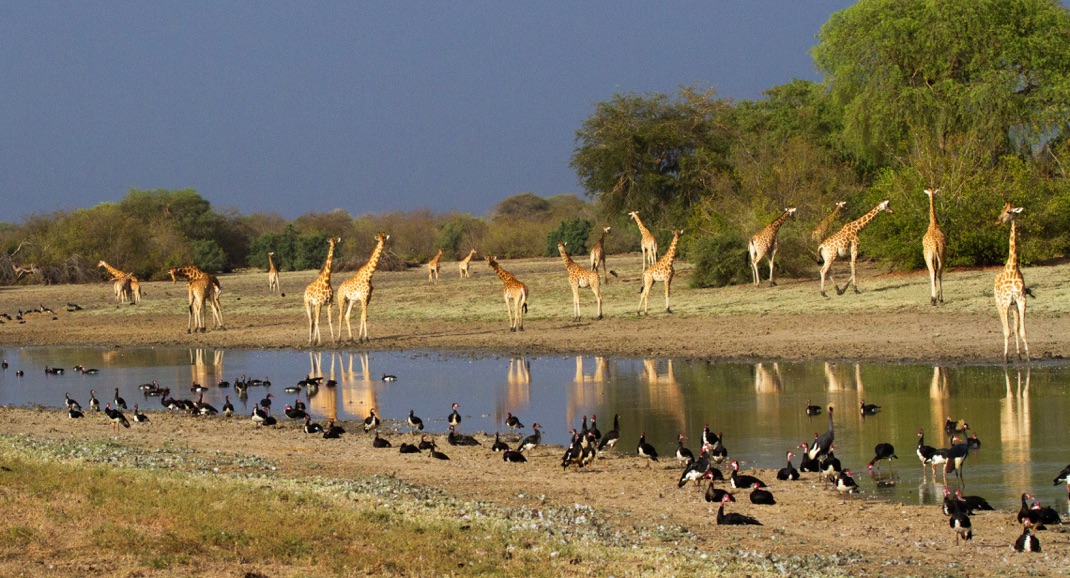
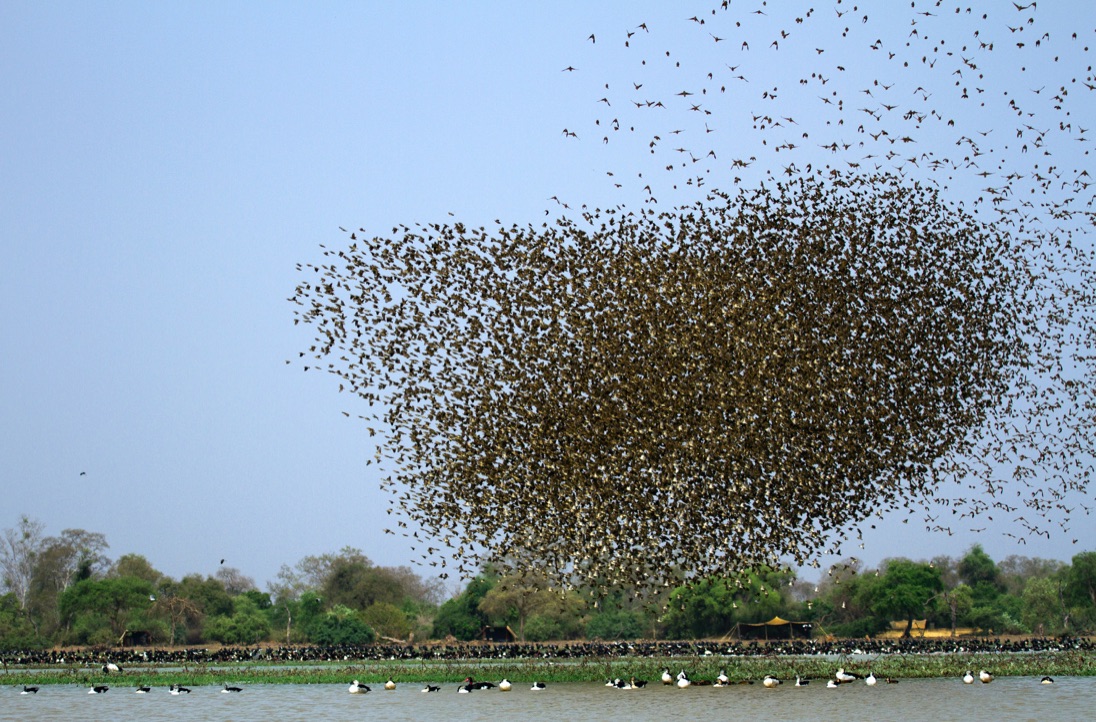
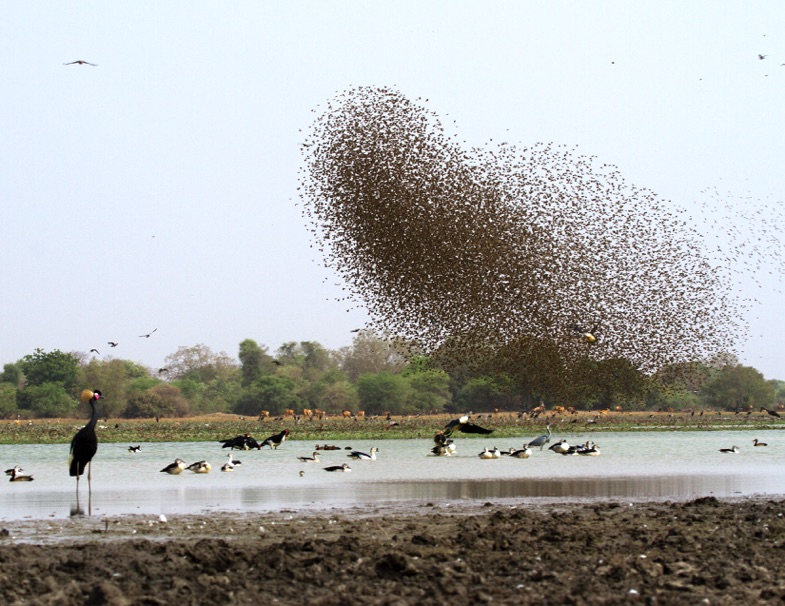
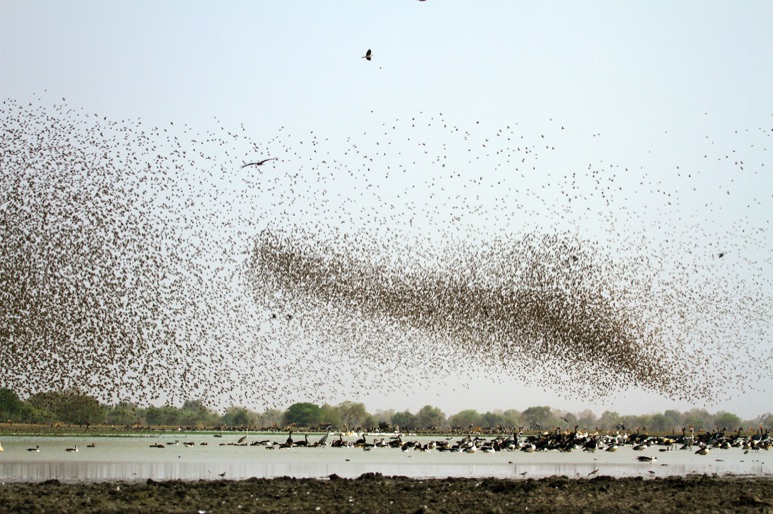
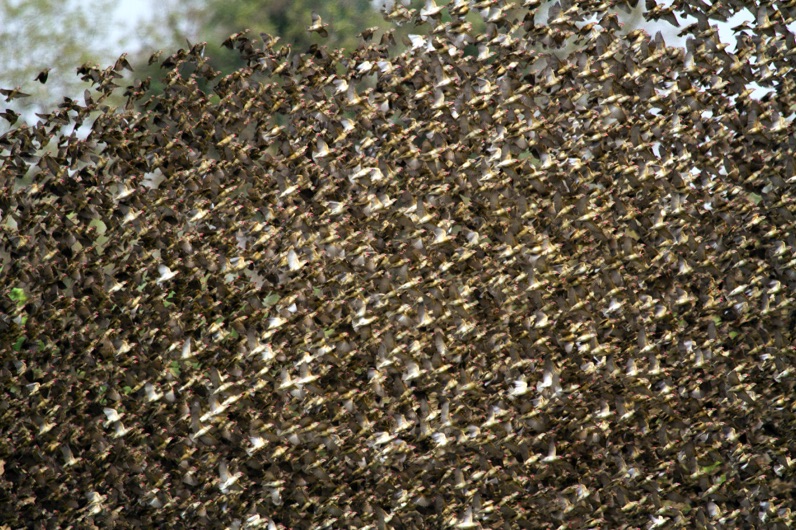
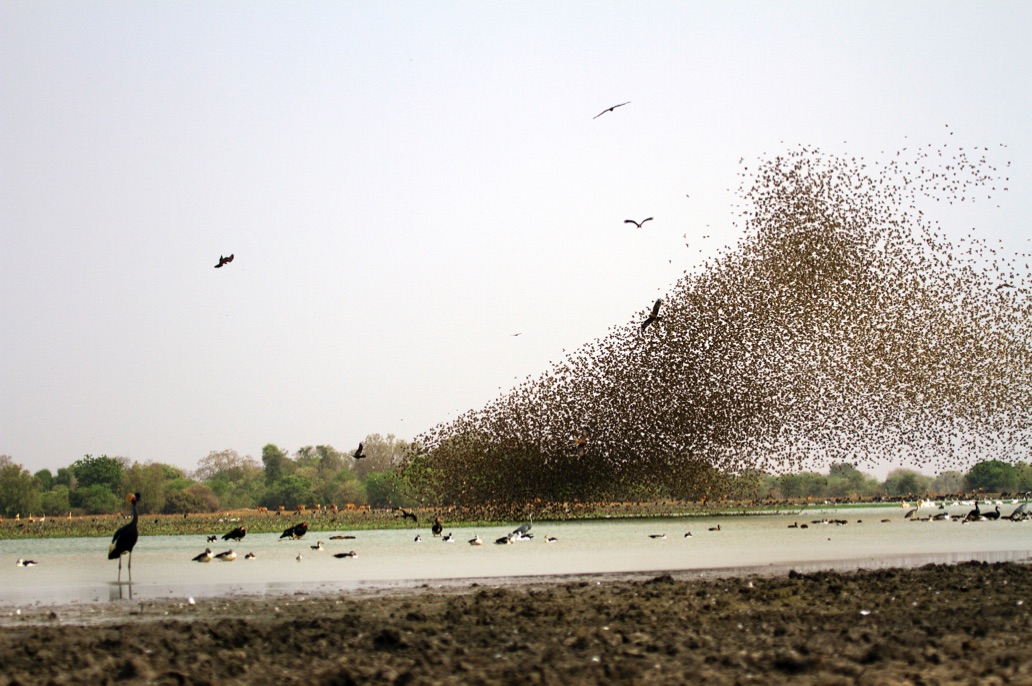
A first for us was seeing the “swarms” of the Red-billed Quelea,
the most numerous bird species on the planet.
The swarm flies down to the water surface for drinks.
An Elephant Never Forgets
The elephant population in Zakouma N.P. in Chad stopped breeding for an entire generation. Between 2002 and 2010, poachers killed 95% of the parks elephants. Almost 4000 eles were slaughtered for their ivory. Poachers, mostly from Sudan, on horseback with automatic weapons would often take out multiple family units at the same time. Camel trains would carry the blood tusks back across the border.
The ele population was estimated 4500 in the 90’s, from poaching that was down to 400.
Hundreds of thousands of these small weavers form clouds in the sky constantly creating various patterns.
As the cloud of birds flies over you, it sounds like a a strong loud wind.
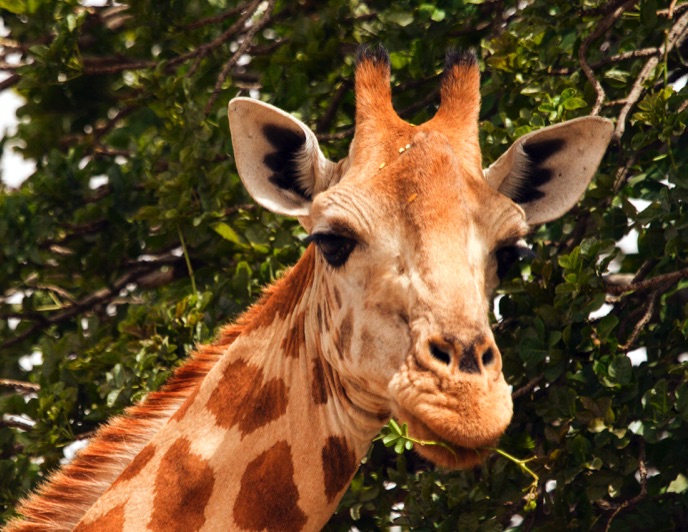
Zakouma National Park was orginally formed in 1963
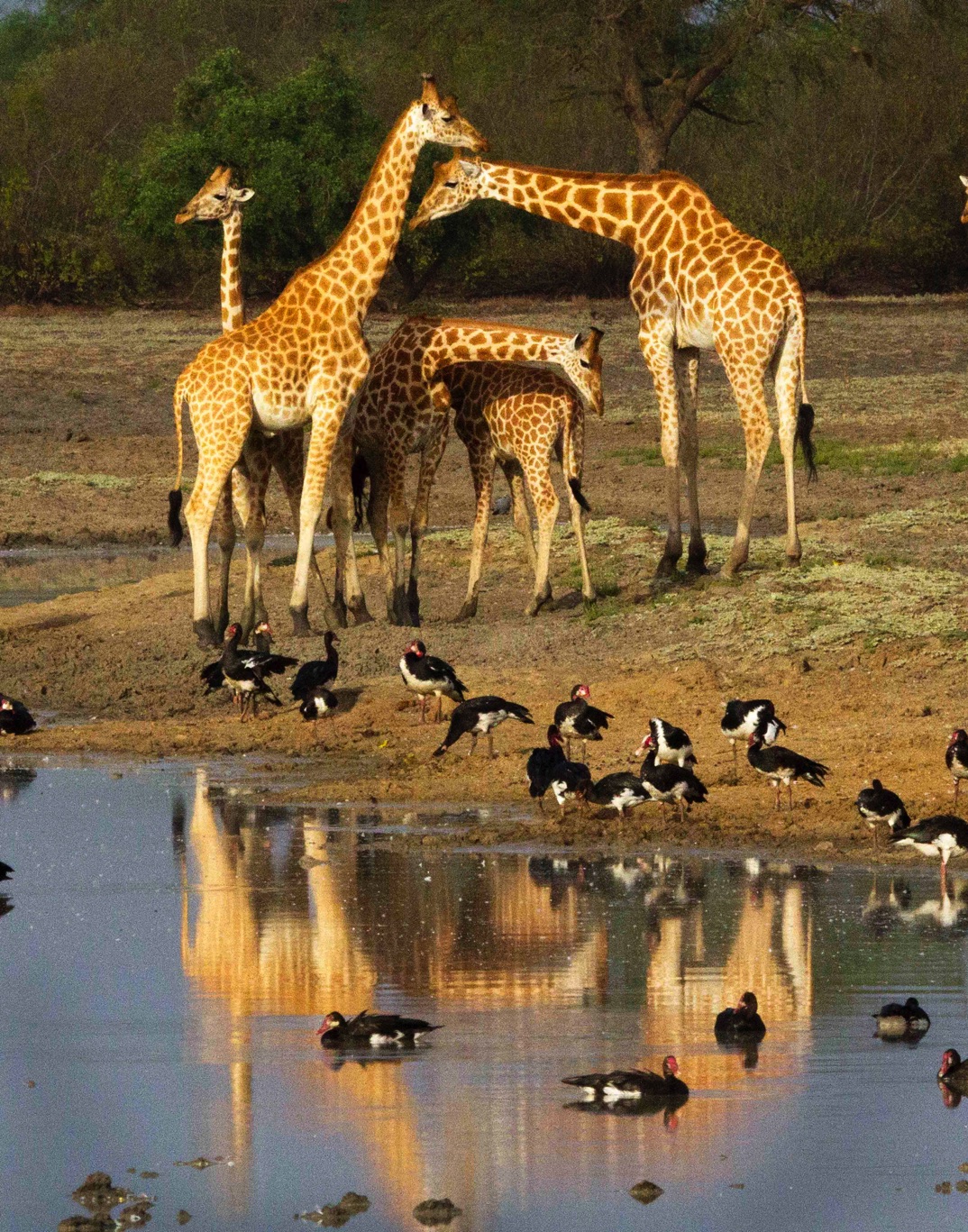
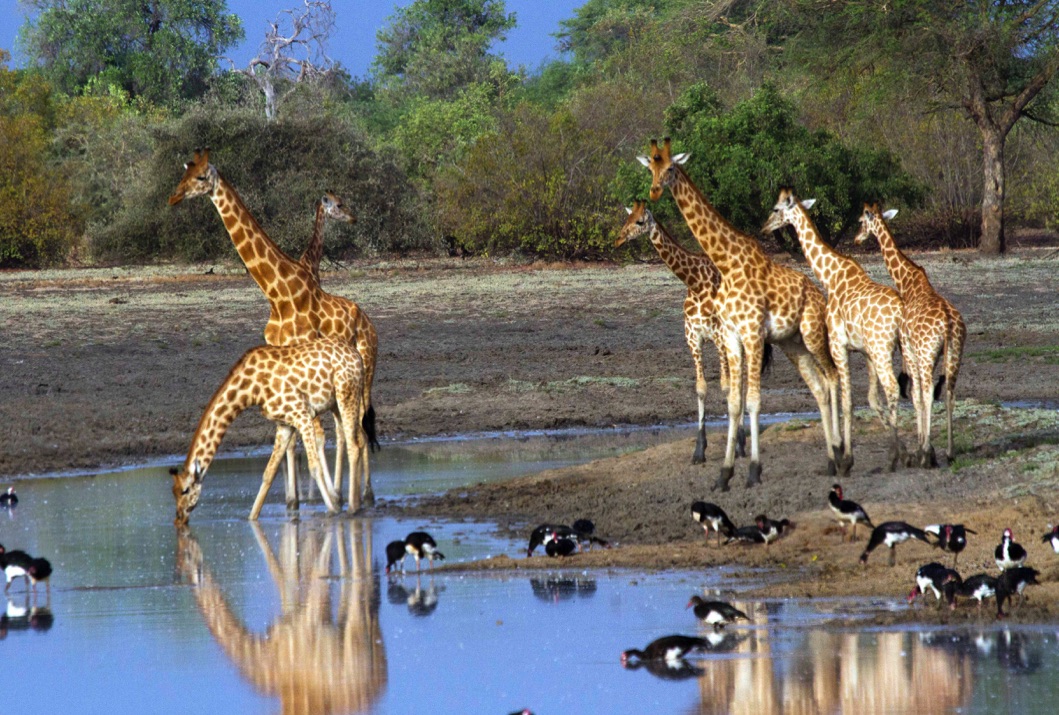
to protect the last 50 Kordofan giraffes in Chad.
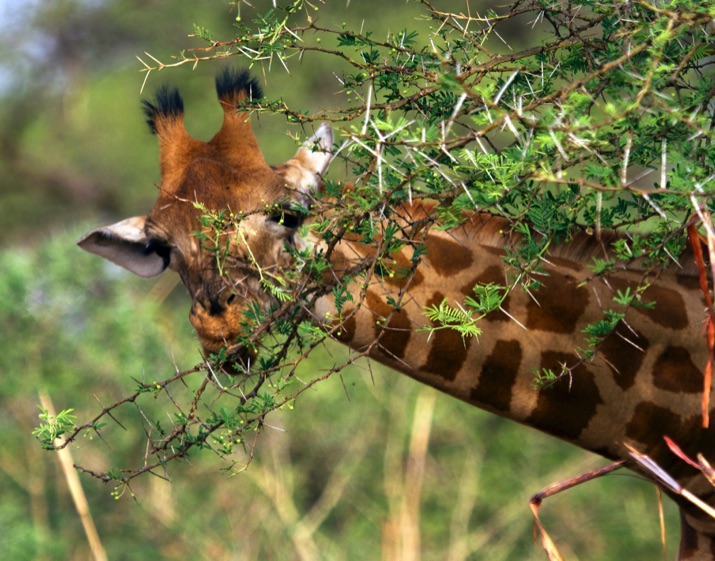
A critically endangered sub-species of giraffe, the Kordofan had been brought to near extinction from poaching and habitat loss.
With conservation efforts that number is up to 2000.
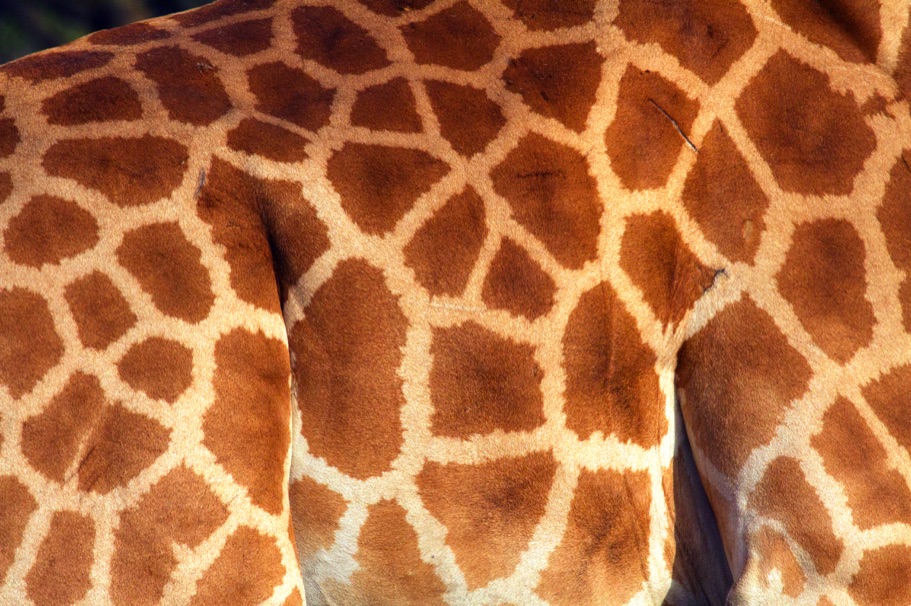
The Kordofan is a bit smaller than the other species, and have lighter coloring and patterns on the legs.
In 2012, six of the park rangers were gunned down execution-style by poachers.
With the work of African Parks, poaching now has been largely controlled and the population is now estimated 560.
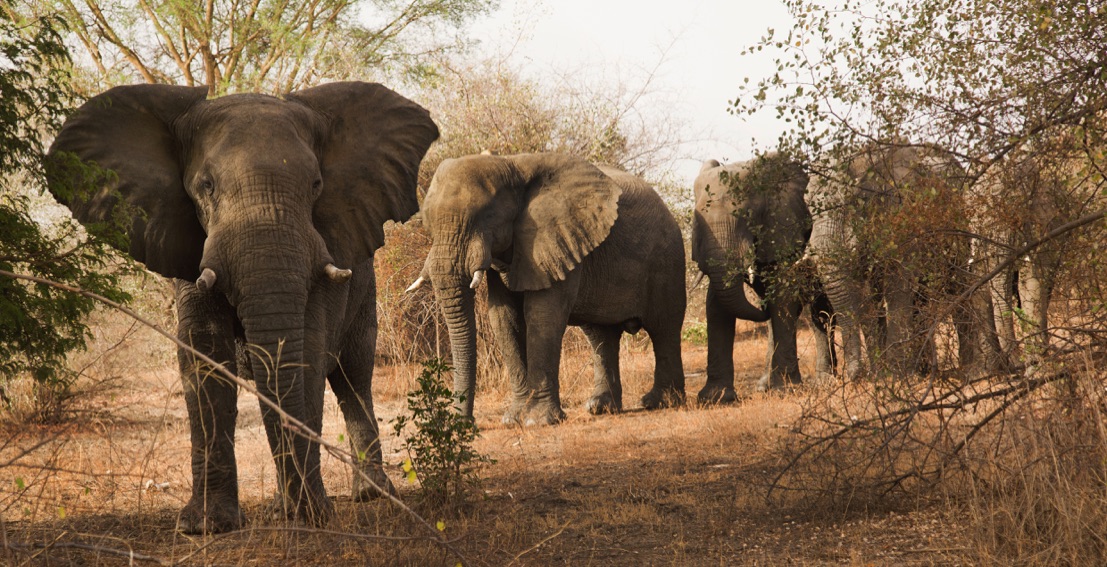
The elephant, is a thoughtful creature. They have strong family bonds and mourn their dead. The PTSD-like effect from the slaughter was for the elephants to stop breeding entirely. Perhaps not wanting to have young they couldn't protect.
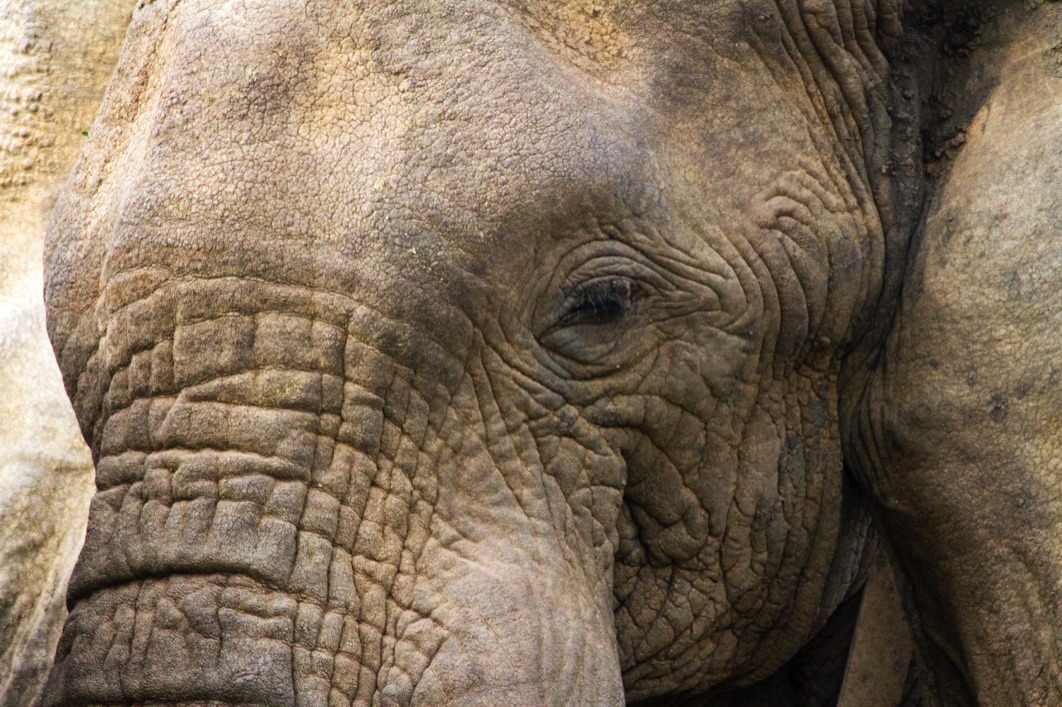
They began traveling in one huge herd for protection, instead of the normal small family units. They fear and hate the smell of humans and the herd avoids it. They seem to have just recently began some breeding after almost 20 years, but the loss of the entire generation could cause problems with the normal dynamics of elephant behavior and the family unit.

Poaching the elephants with the largest tusks, would over time genetically favor eles with smaller tusks.


A group of pelicans is sometimes called a squadron, or a colony or a pod or a scoop.
It can contain thousands of individuals.
The different species of pelicans live on every continent except Antarctica.
The pelican is among world’s heaviest flying bird species.
There are over 500 species of birds in Chad
The Great White Pelican
There's one pelican here who displays his pouch, as the rest spread their wings to help shade the hot desert sun.


The Great White Pelican has a huge gular pouch that can stretch to hold some 3 gallons of water.
As the pelican pushes its bill underwater, the large pouch fills with water and fish. As the bird lifts its head, the pouch contracts, forcing out the water but retaining the fish which are swallowed whole. The red hook at the tip of the pelican's upper mandible/bill, helps grab onto slippery or wiggly fish.
Young pelicans feed by sticking their bills into their parents' throats to retrieve food
- Home
- Pantanal Brazil
- South Africa
- The Amazon
- Australia
- Sri Lanka
- Lemurs of Madagascar
- Chad
- Warriors and Wall
- Pandas of China
- Sea of Cortez-Baja
- The Himba
- Namibia
- South Georgia Is
- Falkland Is
- Painted Dogs of Zimbabwe
- Congo
- Grizzlies of Khutzeymateen
- Kenya
- Sloths of Costa Rica
- Orangutans of Borneo
- The Kill
- Lions of Zambia
- Gorillas of Rwanda
- Tigers of India
- Leopards of Botswana
- Polar Bear Notes
- The Arctic
- Patagonia
- Patagonia Lakes Region
- Antarctica
- Favorite Images
- Favorite Quotes
- Endangered Bios
- Birds of Zambia
- Egypt
- Doctors Only
- Portfolio
The African Spurred Tortoise
Found in arid areas of Chad, the southern Sahara Desert, the Sahel. They will dig burrows several feet deep to escape the desert temperatures 0f 110 to 120F. The tortoise can go weeks without food or water.


As the largest species of mainland tortoise, it can weigh well over 100 pounds, be 30 inches across, and have a life span of 70 to 80 years.

Spur Winged Goose


Marabou Stork
Fishing and catching

Carmine Bee-eater
They nest in large colonies in cliffs, usually near river banks, where they use their bills to dig long horizontal tunnels, often eight feet or more in length.


The West African Desert Crocodile
They reside in burrows or caves in aestivation (a hibernation-like state) during the dry season coming out only when it rains, and gathering at gueltas, small pools, where the water has collected.
An oviparous animal, the crocodile is one that produces eggs, which they may lay on or bury in the sand. The life span is 50-100 years.
Crocs eat a wide range of different animals, Large ungulates like zebra, wildebeest, antelope and medium-size birds, fish, to the small lizards. Crocs spend the bulk of their time in water but they are equally capable to hunt on land.
Here a croc enjoys a catfish.


The male lion has developed a shorter, lighter mane then lions in other areas, an adaption for the hot desert sun.
Lioness with a buffalo kill
The vultures wait their turn
Hooded Vulture
Whiteback Vulture
The Spotted Hyena specializes in eating the bones. Nothing goes to waste
The African Buffalo
Lelwel hartebeest

DeFassa Waterbuck
The Zakouma Lioness


An adult lion can eat over 40 pounds at a time.
A full meal for the pride may result in 3 to 4 days of rest.


Please, All images are copyrighted by Jim Edwards and may not be reproduced in any form including the copying or saving of digital files without written permission or a contract from Jim Edwards Wildlife Photography.
Contact e-mail: edwards617@aol.com
Little Green Bee-eater
Yellow -billed Stork
Fishing, using his wing to minimize glare
Spoon-billed Stork
Knob-billed Duck


Hoopoe
Tawny Eagles
Roan Antelope
Bush Buck

Abyssinian Ground Hornbill

Red-throated Bee-eater


Secretary Bird
Pied Kingfisher


Warthog
A wild member of the pig family


Bohor Reedbuck

Eagle Owl


Olive Baboons


Tantalus Monkey

Great White Egret


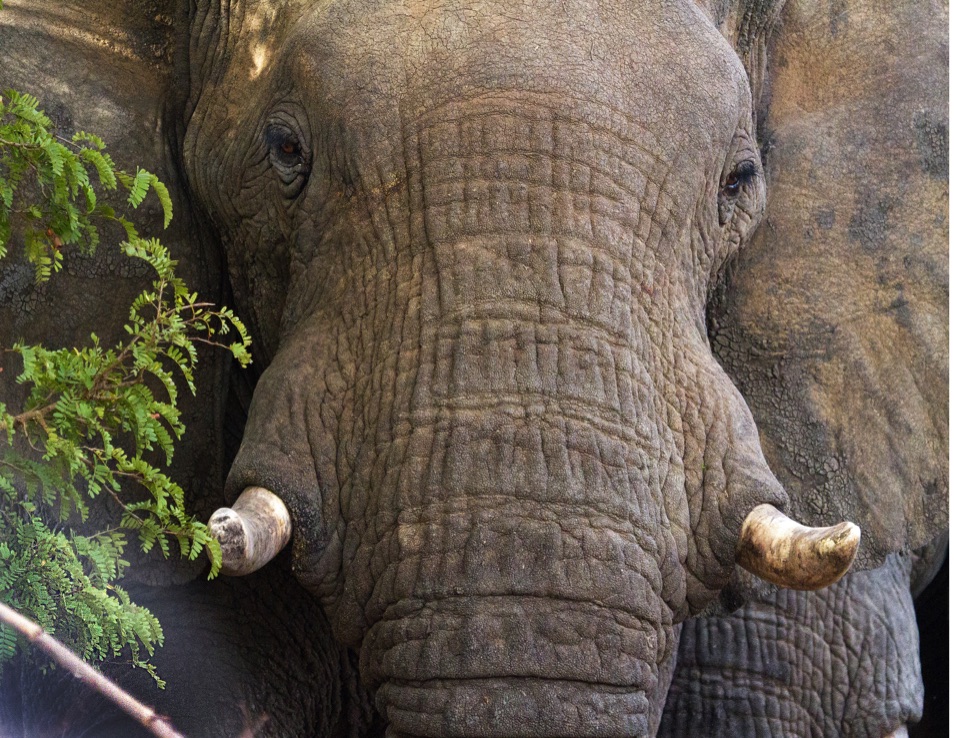
Although due to the prior trauma, amost all of the elephant population in Zakouma travels as a single group, bachelors do break away and form small groups.
This bull has become comfortable coming into camp to a waterhole.
This old bull enjoys the waterhole, but if someone is nearby to run the hose he will come over for a fresh drink and shower.
He appears to have bullet holes in both ears, a testament to the slaughter of 4000 elephants and their near extinction in Zakouma
It's quite an experience to water an elephant.
Cheryl has pretty good aim.
The elephant's trunk is anatomically like our nostrils.
The nasal septum reaches up to his throat.
An elephant doesn't drink with his trunk. He siphons his trunk full, 2.5 gallons, and then uses it as a hose to pour the water into his mouth.
He might drink 50 gallons in a day.
An elephant's trunk contains over 40,000 muscles and he can lift over 700 pounds. He is the only animal that can snorkel.
The trunk serves as a nose, hand, signaling device, tool for gathering food, and digging. Spraying water on himself and then dusting helps control insects.

His sense of smell is up to four times as sensitive as a bloodhound's. It is said an elephant can smell water several miles away.


Red-fronted Gazelle
Tiang Antelope


Male DeFassa Waterbuck
Olive Baboon with
Spur Winged Goose meal
Hartebeest duel
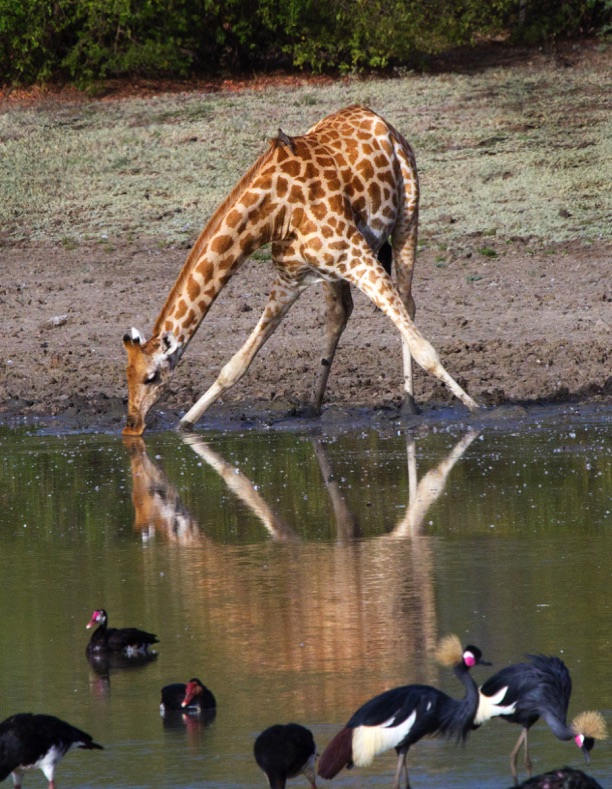
What’s it take to get a drink.
The giraffe has a 20 pound heart to push blood all the way up its neck to keep the brain supplied. Giraffes have one of the highest blood pressures of any mammal, 280/180 mmHg
In their neck they have a complex pressure regulation system of vessels and valves called the “rete mirabile” that prevents blood from rushing into or from the brain on bending over to drink or raising back up. Prevents either a stroke putting head down or syncope raising back up.
Giraffes have a very tight, thick skin over their lower legs which maintains high pressure very similar to a pilot’s g-suit.
Pelicans breath through their mouths not the nares/nostrils.
The nasal openings are sealed off, but in the nasal cavities are special glands which remove excess salt from the blood stream.
Pelicans ingest sea water to survive, these glands make this possible.


2019